
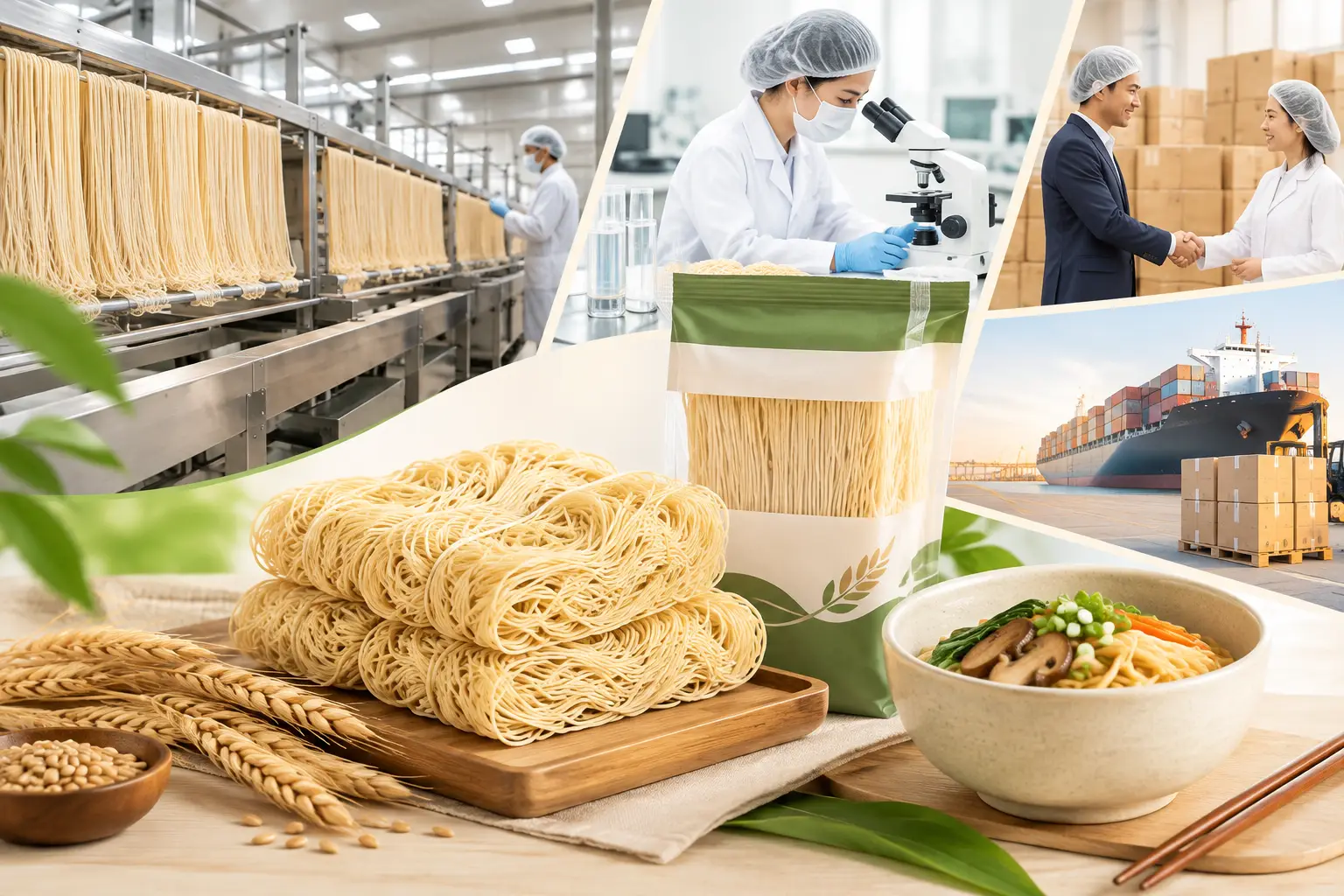
Air dried noodle benefits matter to product teams because the drying method affects far more than the final cooking experience. It can influence ingredient positioning, finished product appearance, texture targets, packaging decisions, and how a noodle range is presented to retailers, distributors, or foodservice customers. For brands building a better-for-you or clean-label-oriented noodle line, air drying is often a practical format worth evaluating.
Unlike conventional fried instant noodles, air-dried noodles are dehydrated through controlled hot-air processing rather than being cooked in oil as part of the drying stage. That distinction creates a different product profile, but it does not automatically make one noodle format right for every market. The strongest product decisions begin with the intended customer, channel, price position, and preparation expectations.
Air Dried Noodle Benefits for Product Development
For private-label developers, air-dried noodle benefits are most meaningful when they support a clear commercial proposition. The format gives brands room to develop noodles that align with evolving customer preferences while maintaining the convenience expected from dry noodle products.
A lower-oil processing approach
The most recognized advantage of air drying is that it avoids the oil-frying step used for many conventional instant noodle blocks. This can support a lower-oil product concept, depending on the complete recipe and final product specification. It also gives brand owners a straightforward processing story to communicate when developing noodle products for health-conscious retail segments.
That said, responsible positioning still matters. Finished nutritional values depend on the flour, starches, seasonings, added ingredients, portion size, and preparation method. Manufacturers and brand owners should assess the finished specification rather than relying on the drying method alone.
A cleaner route for ingredient-led positioning
Air-dried noodle formats can work well with product concepts centered on recognizable ingredients and purposeful formulation. Depending on technical feasibility, brands may explore wheat-based noodles, multigrain blends, vegetable-inclusive formulations, or noodles designed for specific texture and color preferences.
The opportunity is not simply to add more ingredients to a formula. Each ingredient affects dough handling, sheeting, cutting, drying behavior, cooking performance, and cost. A reliable OEM or ODM process helps product teams test these trade-offs early, before packaging or launch plans are finalized.
Distinct texture and eating quality
Air-dried noodles often offer a firmer, more noodle-forward bite than heavily fried formats. This can be particularly valuable for Asian noodle concepts where texture is central to product acceptance, including soup noodles, stir-fry applications, and meal kits.
However, texture is not determined by drying alone. Flour selection, dough hydration, resting time, noodle thickness, wave pattern, and drying controls all influence the final result. Brands should define what “good texture” means for their target market. A quick-cooking cup noodle, a premium retail pack, and a restaurant-oriented noodle portion may require very different specifications.
Format flexibility across channels
Air-dried noodles can be developed in multiple shapes, weights, and pack formats. This makes the category relevant for retail shelves, e-commerce assortments, foodservice portions, meal solutions, and export-oriented private-label programs. The same core noodle concept can sometimes be adapted into individual servings, multi-packs, or bulk-oriented formats, subject to product and packaging requirements.
For distributors, this flexibility can make portfolio planning easier. Rather than sourcing a generic noodle product, they can build a range around a defined market need, such as family-friendly portions, premium Asian flavors, simplified ingredient statements, or region-specific product formats.
What Air Drying Requires From a Manufacturer
Air drying is a controlled manufacturing process, not merely a different finishing step. Consistency depends on balancing moisture removal with noodle structure. If drying conditions are poorly managed, the product may not meet expectations for appearance, cooking behavior, or breakage resistance.
A capable manufacturer needs to control the process from dough preparation through packing. This includes managing raw material consistency, noodle thickness, drying profiles, moisture targets, and final quality checks. For B2B buyers, these controls are particularly important when products will be shipped across markets or supplied repeatedly under a private label.
Quality consistency protects the brand
Customers may try a product once because of its packaging or proposition, but repeat purchases depend on predictable quality. A noodle that cooks differently from one batch to another can create avoidable pressure for retailers, distributors, and foodservice operators.
Food safety systems also belong in the sourcing conversation. Buyers should evaluate whether a manufacturing partner has established quality management practices and relevant certifications for their market needs. Tehki Food operates with ISO 22000, HACCP, GMP, MeSTI, and Halal certifications, providing a structured foundation for customers developing dry noodle products for local and international distribution.
Customization needs technical discipline
Private-label success is rarely achieved by placing a new logo on a standard product. Brands may need adjustments in noodle width, thickness, ingredients, portion size, cooking time, seasoning compatibility, or packaging presentation. Every requested change should be reviewed for its effect on production stability and finished-product performance.
For example, a thinner noodle may cook faster, but it may also require careful handling to retain the desired bite. A more complex flour blend may strengthen a product story, but it can alter dough behavior and production efficiency. Good product development turns these variables into informed choices rather than costly surprises.
Where Air-Dried Noodles Fit Best
Air-dried noodles are especially suitable when a brand wants to balance convenience with a more considered product position. They can support premium instant noodle concepts, clean-label-oriented ranges, selected children’s noodle formats, and dry Asian noodle products designed for retail or export channels.
The format may be less suitable when the primary objective is the lowest possible unit cost or when a market strongly expects the flavor, mouthfeel, and preparation characteristics of conventional fried instant noodles. Air drying can involve different processing demands, and its commercial value depends on whether customers recognize and value the resulting proposition.
This is why product strategy should come before manufacturing selection. A buyer should first define the intended consumer, target channel, competitive set, desired retail position, and required certifications. The manufacturer can then recommend a noodle format that fits the brief instead of forcing the brief to fit an existing product.
Questions B2B Buyers Should Ask Before Launch
Before approving an air-dried noodle program, decision-makers should clarify several practical points. What texture should the noodles deliver after preparation? Is the range intended to lead with convenience, ingredients, premium quality, or family suitability? Will the product be sold as a standalone noodle block, with seasonings, or as part of a broader meal solution?
Buyers should also consider packaging compatibility, export destination requirements, ingredient declarations, and expected production scale. These issues are connected. A product that performs well in development must also be practical to manufacture consistently, package securely, and present clearly at the point of sale.
Working with an experienced OEM or ODM partner can reduce this complexity. The right partner brings manufacturing insight into early discussions, helping brands compare options before they commit to a specification that may be difficult to scale.
Air-dried noodles are not a universal replacement for every fried noodle format. Their value comes from giving brands another well-defined route to create relevant, differentiated dry noodle products. When the product concept, manufacturing controls, and market position are aligned, air drying can become a credible foundation for a private-label noodle range built to grow with its market.