
When a buyer compares air dried noodles vs fried noodles, the real question is rarely just processing method. It is usually about where the product will sit in the market, how it will perform in distribution, and what kind of brand story it needs to support. For importers, private-label brands, foodservice buyers, and category managers, that choice affects more than the noodle block itself.
Both formats are well established in Asian noodle manufacturing, and both can be commercially strong when matched to the right application. The better option depends on your target consumer, price positioning, texture goals, packaging concept, and production priorities. Treating one format as automatically better than the other usually leads to a weaker product decision.
Air dried noodles vs fried: what changes in production
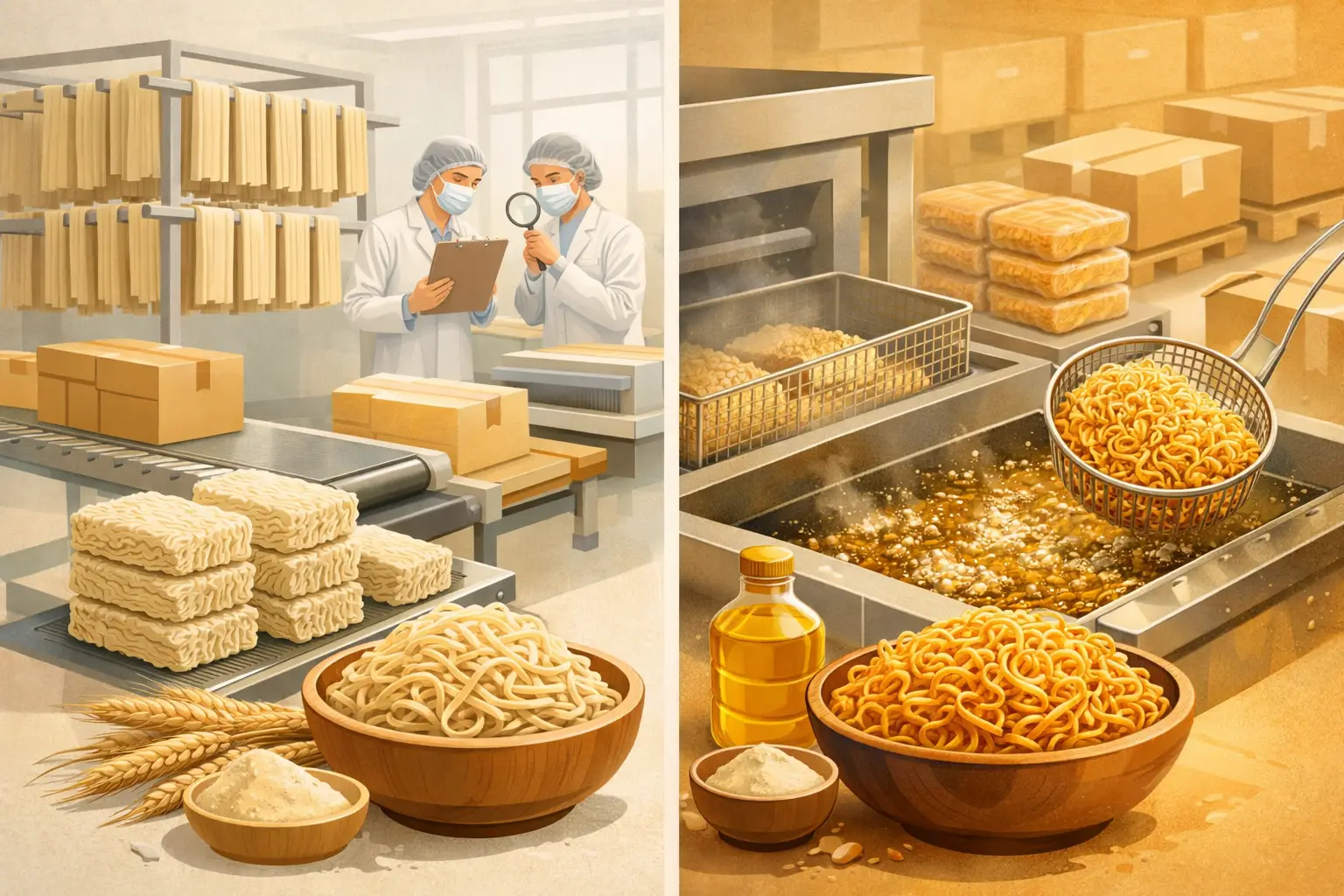
The main difference starts with how moisture is removed after noodle forming. Fried noodles are typically dehydrated in oil, which reduces moisture quickly and creates the familiar instant noodle structure many global markets already understand. Air-dried noodles remove moisture through controlled drying rather than frying, which results in a different product profile and a different market appeal.
From a manufacturing perspective, this is not a cosmetic distinction. Drying method influences noodle texture, cooking behavior, ingredient positioning, and the way the finished product is perceived by buyers and end users. It also shapes how a product is presented in private-label development, especially when a customer wants to align with cleaner or more health-conscious category trends without making unsupported claims.
For B2B buyers, the practical takeaway is simple. Processing method affects product identity. If your brief is built around convenience and a classic instant noodle experience, fried noodles may be the stronger fit. If your brief needs a lighter-positioned or less oil-associated concept, air-dried noodles often make more sense.
Texture and eating experience
Texture is one of the first areas where the difference becomes clear. Fried noodles often deliver the familiar instant noodle bite that many consumers expect. The structure created during frying can support a quick-cooking format and a recognizable mouthfeel that works well in mainstream instant noodle lines.
Air-dried noodles tend to offer a different eating experience. Depending on formulation and noodle type, they can present a firmer texture and a profile that feels closer to traditional dried noodles rather than conventional fried instant noodles. That can be an advantage in premium, family-oriented, or specialty concepts where buyers want something that feels less mass-market.
This is where product development should stay practical. There is no universal winner on texture. Some retail categories benefit from familiarity, while others benefit from differentiation. A distributor building a value-driven instant noodle range may prioritize the eating experience consumers already know. A brand owner launching a more modern noodle line may prefer the texture profile of an air-dried format because it supports a different category message.
Positioning and market perception
The strongest reason businesses compare air dried noodles vs fried is often brand positioning. Processing method changes how the product is discussed with retail buyers, foodservice partners, and consumers.
Fried noodles are widely accepted, commercially proven, and suitable for many high-volume applications. They fit markets where speed, familiarity, and standard instant noodle expectations matter most. In many cases, they also support straightforward category placement because buyers already understand what the product is.
Air-dried noodles can be useful when a brand wants a more selective market position. They are often chosen for cleaner product concepts, family-focused ranges, child-oriented formats, or product lines that want to reduce the heavy association with fried processing. That does not mean every market will pay more attention to air-dried products, but in the right segment, the distinction matters.
For OEM and ODM development, this decision should be made early. Packaging language, product naming, serving suggestions, and texture expectations all become easier to align when the processing choice is already clear.
Product development trade-offs for buyers
No processing method solves everything. Air-dried noodles and fried noodles each come with trade-offs that should be discussed during development rather than after launch.
Air-dried noodles may support the kind of positioning many modern brands want, but they also require careful formulation and process control to achieve the desired cooking performance and texture. Buyers who want this format should work with a manufacturer that can maintain consistency at scale, not just produce a sample that looks good on paper.
Fried noodles can be highly efficient for certain product types and are well suited to established instant noodle formats. At the same time, they may not align with every brand brief, particularly when the business is trying to present a different processing story or broaden into a more health-conscious segment.
This is why the best sourcing conversations are not centered only on noodle type. They should also cover target channel, end-market expectations, packaging format, sauce or seasoning compatibility, serving size, and whether the product is intended for retail shelves, export distribution, or foodservice programs.
Air dried noodles vs fried in private-label strategy
Private-label and house-brand development adds another layer to the decision. A retailer or importer may not simply be choosing between two noodle formats. They may be deciding how to structure a category.
For example, a fried noodle range can serve as the accessible, high-volume line that meets everyday demand. An air-dried noodle range can then sit beside it as a differentiated option for buyers looking for a different texture or product story. In that sense, the formats are not always in direct competition. They can work together within a broader portfolio strategy.
This matters for distributors and brand owners who want to avoid overbuilding a single product concept. A balanced noodle portfolio often performs better than trying to force one format into every market segment. The smart question is not which noodle is best in general. It is which noodle is right for the audience, price band, and channel you are targeting.
Manufacturing consistency matters more than the label
A common mistake in sourcing is assuming that the words air-dried or fried alone guarantee product quality. They do not. What matters is whether the manufacturer can deliver repeatable texture, controlled processing, stable product specifications, and reliable documentation across production runs.
For B2B buyers, this is where supplier capability becomes more important than product terminology. A strong manufacturing partner should be able to explain how the noodle is developed, how consistency is managed, and how the format can be adjusted for brand requirements such as noodle width, shape, ingredient profile, portion format, and packaging needs.
This is especially relevant for export-oriented programs, where product consistency and food safety systems are a must. Buyers need confidence that a product developed for one market can be reproduced accurately for future orders and adapted when category needs change. Tehki Food approaches this with a manufacturing mindset grounded in certification, process control, and customer-specific development rather than one-size-fits-all product supply.
How to choose the right format for your business
A useful starting point is to decide what problem the noodle needs to solve. If the goal is to enter a proven instant category with familiar eating characteristics, fried noodles may be commercially practical. If the goal is to support a differentiated, cleaner-positioned, or family-oriented concept, air-dried noodles may be the better foundation.
Next, consider your market realities. Retail buyers may respond differently from foodservice operators. Export distributors may prioritize broad consumer acceptance, while premium private-label programs may focus more on product story and perceived quality. The right answer can change by country, channel, and customer segment.
Then look at operational fit. Product quality has to be scalable, not just attractive at launch. That means evaluating manufacturing discipline, customization capability, certification standards, and whether the supplier understands how to translate a commercial brief into a repeatable noodle product.
A good noodle format is not chosen in isolation. It should fit your brand architecture, your margin expectations, your target user, and your long-term category plan.
The most effective product decisions come from treating air-dried and fried noodles as strategic tools, not simple labels. When the format, market position, and manufacturing execution align, the product becomes much easier to sell, scale, and sustain.