
A 70 g noodle cake may suit a compact retail meal kit, while a 120 g format may better support a restaurant bowl or family-oriented product. The question, “can noodle portions be customized,” is therefore not only about changing a weight on a specification sheet. For brand owners and foodservice buyers, it affects consumer value, cooking performance, packaging choices, production efficiency, and how consistently the product can be supplied across markets.
For dry Asian noodle development, portion customization is practical when it begins with a clear commercial purpose. The right portion should fit the product’s intended occasion, noodle style, seasoning or accompaniment plan, target channel, and pack architecture. A reliable OEM or ODM manufacturing partner helps turn those requirements into a format that is repeatable at production scale.
Can Noodle Portions Be Customized for Different Markets?
Yes. Noodle portions can be customized by net weight, noodle shape, individual cake size, bundle count, and the number of portions within an outer pack. However, not every combination will be equally suitable for every noodle type or packaging method. Customization works best when the selected format supports stable handling during manufacturing, packing, transport, and preparation.
Retail products often use defined single-serve portions because shoppers want straightforward preparation and clear value. A multipack may contain several individually portioned noodle cakes, or it may use a larger inner bundle designed for households. Foodservice formats can take a different approach. Operators may prefer larger bulk packs, consistent pre-portioned nests for faster kitchen work, or a format that allows staff to control serving size based on the menu.
Export markets add another consideration. A portion that performs well in one market may not match eating habits, bowl sizes, menu pricing, or retailer expectations in another. For this reason, portion development should be considered alongside the wider product brief, rather than treated as a final packaging decision.
Portion Size Starts With the Intended Eating Occasion
The first decision is not simply, “How many grams?” It is, “What is this noodle product meant to do?” A snack-sized cup concept, a standard individual meal, a premium restaurant-style bowl, and a toddler-oriented noodle product each require different thinking.
For retail private-label noodles, a brand may want a portion that delivers a satisfying prepared serving without making the pack unnecessarily large. For foodservice, the objective may be speed and consistency. A pre-measured noodle portion can help operators reduce variation between servings, simplify prep procedures, and plan inventory more accurately.
Noodle type also matters. Thin rice vermicelli, wheat noodles, egg noodles, ramen-style noodles, and broader flat noodles do not occupy the same volume at the same weight. Their water absorption and cooked yield can differ as well. This means two portions with an identical dry weight may create noticeably different results in the bowl.
A manufacturer should assess the relationship between dry weight, cooked appearance, texture, and intended serving method. For example, a product designed for soup may need to account for broth volume and toppings, while a stir-fry format may be judged by how well the noodles carry sauce and fill a tray or bowl.
The Noodle Format Influences What Is Practical
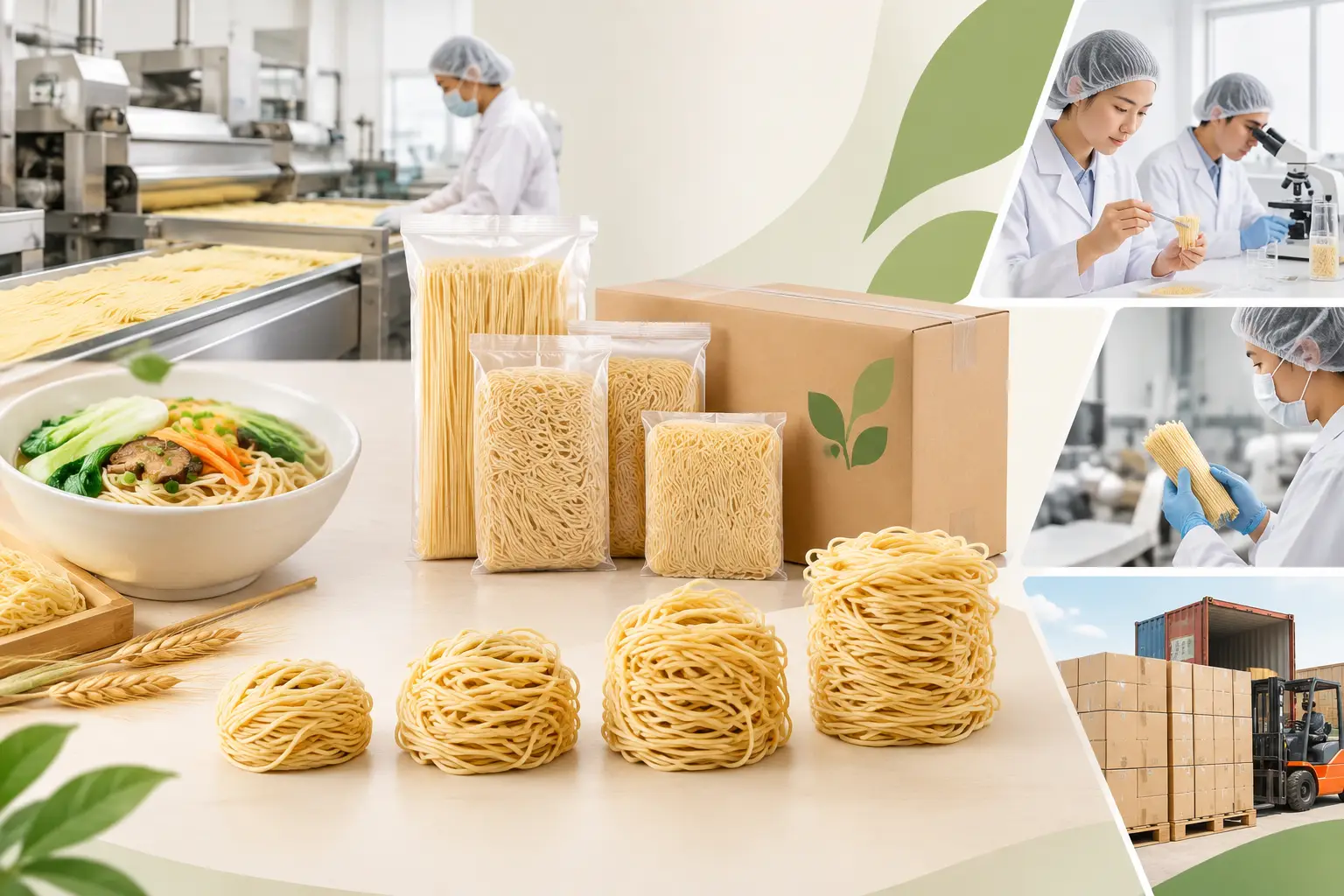
Portioning can be delivered in several physical formats. Common options include compressed noodle cakes, folded blocks, individual nests, straight bundles, or loose-packed noodles. The best choice depends on the noodle’s formulation, thickness, drying process, and intended pack style.
Air-dried noodles may offer a useful foundation for brands seeking a lighter processing approach or a clean-label product direction, but the selected portion still needs to maintain its shape through packing and distribution. Fried noodle formats have their own production and handling considerations. The goal is not to force every noodle into the same portion format, but to select a design that protects product integrity.
Smaller portions can be especially relevant for child-friendly noodle concepts. Here, development teams should consider not only the weight but also noodle length, texture after cooking, and how easily the product can be prepared. A smaller pack is not automatically a better child-focused product if the noodle format is difficult to portion, cook, or serve consistently.
Larger portions are not always the answer for foodservice either. A bulk format may lower packaging material per serving, but it can require more staff measuring and create greater variation at the point of preparation. Pre-portioned nests may use more internal packing but offer operational control. The right answer depends on the operator’s workflow and service model.
Packaging Must Protect the Portion and Support the Brand
Portion customization and packaging development should proceed together. Once the noodle size changes, the pack dimensions, fill ratio, carton configuration, and product presentation may also need to change. A noodle cake that looks well-proportioned in one pouch can appear undersized or overly compressed in another.
For consumer retail, packaging needs to communicate the number of servings clearly and protect the noodles from breakage. For distributors and importers, outer-carton efficiency and product consistency are equally relevant. A well-designed portion should stack and ship logically without creating avoidable empty space or increasing the risk of damage.
Brands also need to decide whether portion control happens at the individual unit, multipack, or foodservice pack level. A single-serve pack can make preparation simple. A multipack can offer flexibility for households. A larger professional pack may be better for kitchens that already have established portioning procedures. These are commercial decisions, but they should be validated against production capability early in the project.
Consistency Matters More Than a Custom Number
A custom portion only creates value when it is consistent. Buyers need confidence that each pack reflects the agreed product specification and performs predictably. Variation in dry weight, noodle density, breakage level, or cooking behavior can affect consumer perception and foodservice execution.
This is where manufacturing controls make a meaningful difference. Ingredient handling, dough preparation, sheeting or extrusion, cutting, drying or frying, portion formation, and final packing all influence the finished product. Quality systems should support checks at the stages where variation can occur, rather than relying only on a final pack-weight inspection.
For export-oriented products, documentation and traceability are also part of practical portion management. The product specification should clearly define the target net weight, acceptable format, pack count, cooking guidance, and packaging details. When brand owners, manufacturers, and packaging teams work from the same approved specification, later changes are easier to manage and production decisions are more reliable.
Tehki Food applies this manufacturing-focused approach to customized dry Asian noodle development, supported by food safety and quality systems including ISO 22000, HACCP, GMP, MeSTI, and Halal certification. For B2B buyers, the value is not simply access to a different portion size. It is having a development process that considers product quality, repeatability, and commercial fit from the beginning.
Questions to Settle Before Developing a Custom Portion
A productive discussion with a noodle manufacturer starts with the end use. Buyers should be ready to describe the target channel, intended serving occasion, preferred noodle type, desired preparation method, and whether the product will be sold as a single serving, multipack, or bulk format.
It also helps to identify what matters most for the launch. Is the priority a compact retail pack, a generous foodservice bowl, easier kitchen portioning, a child-friendly format, or a differentiated private-label offer? There may be trade-offs. A highly specific portion size could require a different noodle cake shape or packaging configuration. A larger format may affect carton efficiency. A smaller format may need careful design to retain an appealing cooked presentation.
Samples and practical cooking evaluation are valuable before finalizing a specification. The product should be assessed as it will be used in the real market context: in broth, with sauce, as part of a meal kit, or within a foodservice recipe. This helps ensure the selected portion supports the finished eating experience rather than merely meeting a dry-weight target.
Custom noodle portions are most effective when they solve a defined business need. Start with the serving experience and sales channel, then build the portion, noodle format, and packaging around that purpose. That approach gives a new noodle product a stronger foundation for consistent production and a clearer place in the market.