
A noodle product can look straightforward on a retail shelf, but the work behind a successful launch is rarely simple. Brand owners must make decisions about noodle texture, cooking performance, ingredients, pack format, food safety controls, labeling requirements, and production consistency before a product is ready for market. Choosing the right ODM Asian noodle factory gives businesses a practical way to manage those decisions with manufacturing support rather than trying to solve each one independently.
For importers, distributors, foodservice operators, and private-label brands, the goal is not simply to buy noodles. It is to develop a product that fits a market position, performs reliably after transport and storage, and can be reproduced consistently as demand grows. That requires a manufacturing partner with both noodle expertise and disciplined production systems.
What an ODM Asian Noodle Factory Should Deliver
ODM, or original design manufacturing, is different from simply placing an order for an existing stock product. An ODM manufacturer can support the development of a noodle concept based on the buyer's target market, product brief, and commercial requirements. The buyer may select from proven formats, adapt specifications, or create a more distinct house-brand product within realistic manufacturing parameters.
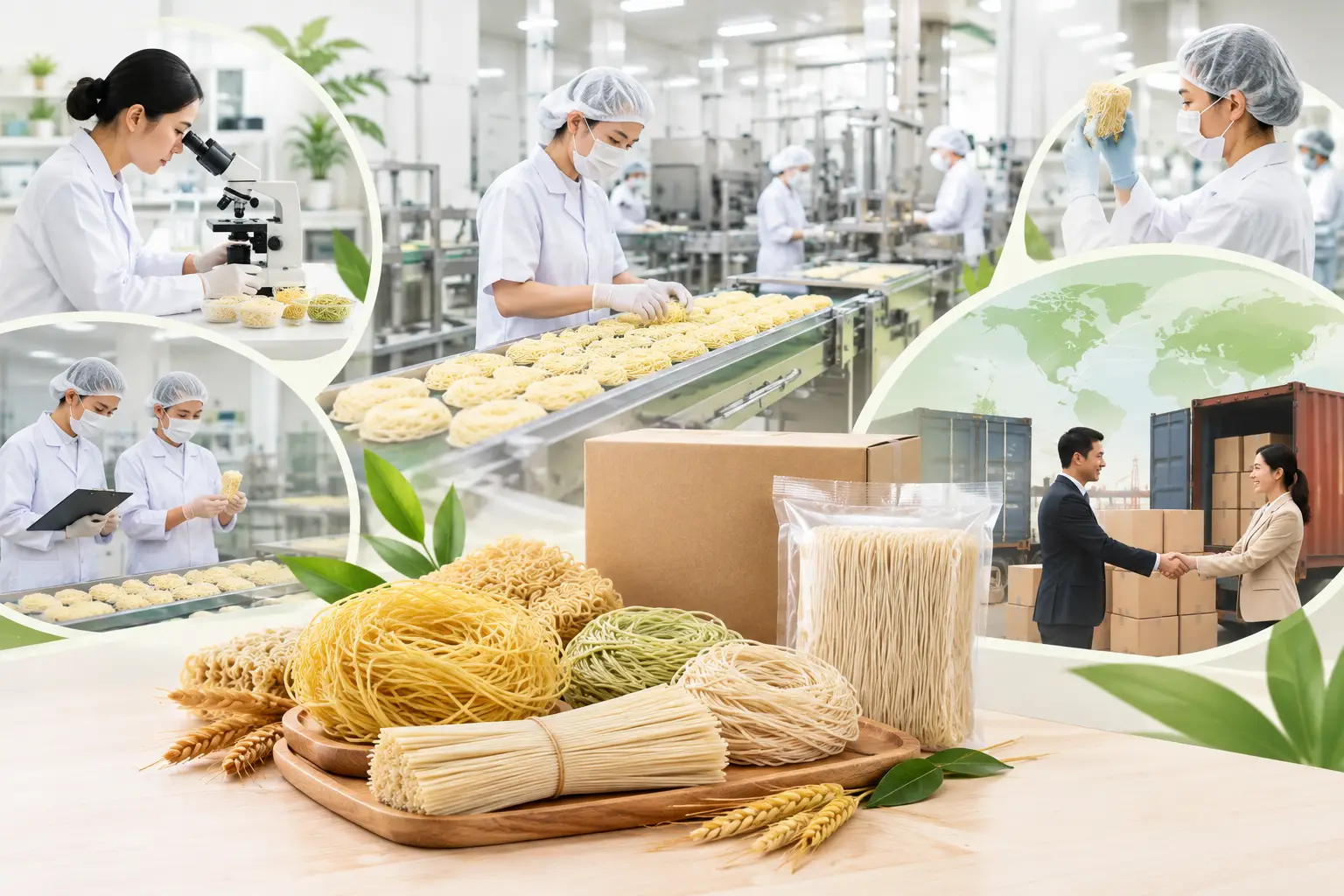
For dry Asian noodles, that may involve selecting an air-dried or fried noodle format, adjusting noodle thickness and bite, considering ingredient preferences, defining portion sizes, and choosing suitable packaging. The practical value of ODM is that product development and production are connected. A concept is assessed not only for how it sounds in a presentation, but also for whether it can be made consistently, packed efficiently, and supplied at scale.
A capable factory should be transparent about where customization is feasible and where a proven specification may be the better commercial choice. More customization can help a brand stand apart, but it can also add complexity to sourcing, production planning, and quality control. The best decision depends on the intended channel, price position, target consumer, and projected demand.
Start With the Product Brief, Not the Noodle Sample
Many sourcing conversations begin with a sample. Samples matter, but they should follow a clear product brief. Without one, feedback can become subjective and development can drift between preferences without moving toward a production-ready specification.
A useful brief identifies the intended market, sales channel, preferred noodle style, preparation method, packaging format, target portion, ingredient direction, and brand positioning. A foodservice noodle may need different handling characteristics from a retail noodle block. A child-friendly noodle concept may require a different format and portion approach than a traditional adult-oriented instant noodle product. These are manufacturing questions as much as marketing questions.
Texture and cooking performance are commercial decisions
Texture is one of the most visible product attributes in Asian noodles. However, the preferred texture depends on the noodle style and how the product will be prepared. A noodle designed for soup may need to hydrate differently from one intended for stir-fry use. A product sold through retail may be prepared in home kitchens with varied methods, while a foodservice format may be handled by trained staff under more controlled conditions.
An experienced ODM partner helps translate broad requests such as "firm," "smooth," or "authentic" into measurable production choices. Flour selection, dough handling, noodle dimensions, drying method, and frying process can all affect the final result. The point is not to pursue one universal standard of quality. It is to build the right performance for the product's intended use.
Format affects positioning and operations
Dry noodle formats offer different opportunities. Air-dried noodles can support brands that want a less oil-intensive processing approach. Fried noodles remain relevant where familiar texture and preparation characteristics suit the product concept. Traditional noodle shapes, compact blocks, and portioned formats can each serve different retail, export, or foodservice needs.
The format should also fit the supply chain. Packaging needs to protect product integrity through distribution while presenting the brand clearly at the point of sale. A factory that understands both manufacturing and packaging can help buyers avoid a common problem: developing a visually appealing concept that is difficult to run efficiently or protect adequately during transport.
Evaluate Quality Systems Beyond the Sales Conversation
Noodle sourcing is a long-term quality decision. Buyers should assess whether a factory has structured food safety and quality systems that support repeatable production, documented controls, and traceability. Certifications do not replace buyer due diligence, but they provide useful evidence that quality management is built into the operation.
For an export-oriented noodle manufacturer, certifications such as ISO 22000, HACCP, GMP, MeSTI, and Halal can be relevant indicators of established systems. Just as important is how those systems are applied in routine work: raw material control, production monitoring, sanitation practices, finished-product inspection, and corrective action when issues are identified.
When evaluating a potential partner, business buyers should ask practical questions about how specifications are controlled from approved sample through commercial production. Consistency should not depend on a single batch or an individual operator's judgment. It should be supported by documented standards, trained teams, and processes that can be monitored over time.
Build a Specification That Protects Your Brand
A detailed product specification is one of the most useful tools in an ODM project. It aligns expectations before full production and gives both the buyer and manufacturer a clear reference point. It also reduces the chance that an approved concept is interpreted differently as packaging, procurement, and production move forward.
The specification should cover the features that genuinely matter to the finished product, including:
- Noodle type, dimensions, texture expectations, and preparation method
- Key ingredient and formulation requirements
- Portion weight, noodle block or bundle format, and pack configuration
- Packaging materials, artwork responsibilities, and labeling information
- Quality parameters, inspection expectations, and product approval process
This level of detail is especially valuable for private-label programs sold across multiple markets. It creates a common language between brand, procurement, quality assurance, and manufacturing teams. It also makes future product extensions easier, whether the brand adds a new noodle style, a different pack size, or a related product line.
Consider Export Readiness From the Beginning
Export readiness is not an activity to leave until after product development. It should influence decisions from the first stage of the project. Different destination markets may have different buyer expectations for pack language, product documentation, case configuration, and ingredient presentation. Importers also need confidence that the factory can support clear communication and stable production planning.
Malaysia is well positioned for businesses sourcing Asian noodle products for regional and international markets. For buyers, the more important question is whether the manufacturer has the operational discipline to support export-focused requirements without treating them as an afterthought.
An experienced partner will discuss practical matters early, including packaging suitability, artwork review, shipping carton needs, and how changes to the product brief may affect the manufacturing process. This does not mean every project needs maximum complexity. In many cases, a carefully chosen, proven format is the most efficient path to market.
Choose a Partner That Can Scale With the Product
The right factory relationship should continue after the first production run. Markets change, customer feedback arrives, and brands may need to adjust portion formats, develop a cleaner-label direction, or add products for new channels. A manufacturer that understands the original product rationale is better placed to support those changes responsibly.
Tehki Food works with B2B customers on OEM and ODM dry Asian noodle programs by combining traditional noodle knowledge with modern manufacturing controls. Its approach is centered on practical customization, dependable quality systems, and formats suited to private-label and export-focused business requirements.
Before committing to an ODM Asian noodle factory, bring the factory into the product discussion early and share the commercial realities behind the idea. A strong manufacturing partner will help turn a promising noodle concept into a specification that is clear, practical, and ready to support your brand as it grows.