
A noodle product can be well formulated, competitively priced, and aligned with market demand - but if the packaging fails, the product still fails at shelf level. That is why choosing a custom noodle packaging supplier is not a minor procurement task. For brand owners, importers, distributors, and foodservice buyers, packaging affects product protection, presentation, operational efficiency, and the credibility of the brand itself.
In noodle manufacturing, packaging is not only about artwork or bag size. It sits at the intersection of product integrity, line compatibility, export requirements, labeling needs, and customer expectations. A supplier that understands noodles as a category will usually make better decisions than one that only treats packaging as a generic printed material order.
What a custom noodle packaging supplier should really provide
A capable packaging supplier should do more than print a pouch with a logo. In a B2B noodle project, the real value comes from supporting packaging that fits the product, the production process, and the target market.
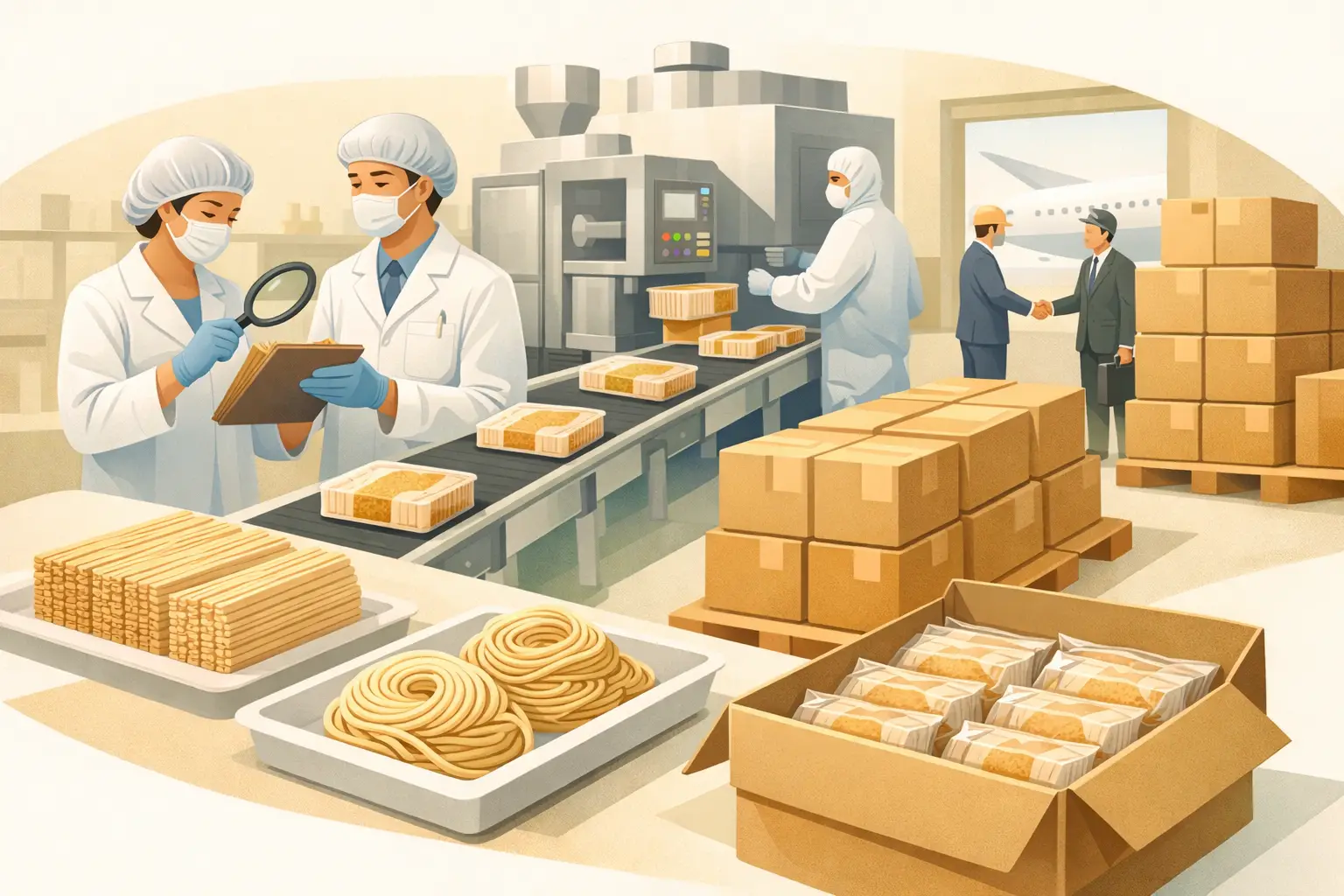
Different noodle formats create different packaging demands. Air-dried noodle bundles, fried noodle blocks, child-friendly portion packs, and foodservice bulk packs do not behave the same way during filling, sealing, transport, and storage. The right supplier should understand how pack structure, material thickness, seal performance, and pack dimensions affect the final result.
This matters even more in OEM and ODM projects. A private-label noodle range often needs packaging decisions that support both commercial goals and operational practicality. A retail importer may prioritize shelf presentation and multilingual labeling space. A foodservice buyer may care more about pack durability, carton efficiency, and portion consistency. The supplier should be able to work within those priorities without forcing a one-size-fits-all packaging approach.
Why packaging decisions affect more than appearance
Buyers sometimes begin with artwork and branding, which is understandable. Packaging is visible, and it shapes first impressions. But in manufacturing, appearance is only one part of the decision.
Packaging has to run efficiently on the production line. If a film structure looks attractive but creates sealing inconsistency or handling issues, the cost shows up elsewhere. A design that works well on screen may not perform well under real manufacturing conditions. That is why coordination between noodle manufacturer and packaging supplier is so important.
There is also the issue of product fit. Noodles vary in shape, breakability, portion size, and density. A pack that is too tight may increase breakage risk. A pack that is too loose may affect presentation, carton loading, or transport efficiency. Small design decisions can create larger downstream costs when products are packed at scale and shipped across markets.
Export-oriented businesses should think even more carefully here. Packaging may need to support different labeling layouts, language requirements, distribution environments, and retail handling conditions. The right supplier should be able to accommodate these realities rather than treat them as late-stage revisions.
How to evaluate a custom noodle packaging supplier
A good supplier evaluation starts with technical fit, not only price comparison. Cost always matters, but the lowest unit price can become expensive if the packaging causes waste, rework, poor line performance, or inconsistent presentation.
First, assess category understanding. Has the supplier worked with dry food products, and more specifically noodle formats? Packaging for noodles needs practical knowledge of filling conditions, compression risk, and final pack performance. A supplier familiar with dry Asian noodle applications will usually ask better questions early.
Second, look at print and material consistency. Private-label and house-brand products depend on reliable visual execution. Color variation, poor sealing areas, or inconsistent dimensions can weaken brand perception and complicate packing operations. Buyers should want confidence that repeat orders will match approved specifications.
Third, review communication discipline. In custom projects, delays often come from artwork approvals, specification gaps, and unclear revision control rather than production alone. A dependable supplier should be organized in handling proofs, version updates, technical confirmations, and packaging documentation.
Fourth, consider whether the supplier can support growth. A packaging solution that works for a pilot order may not be suitable when volume expands or when the product range broadens into new weights, flavors, or markets. Scalability matters, especially for importers and brand owners building long-term category presence.
Custom noodle packaging supplier requirements for OEM and private label
When noodles are produced under OEM or private-label arrangements, packaging becomes part of the product development process, not an afterthought. The manufacturer and packaging supplier need to work together to make sure the chosen pack suits the noodle type, packing method, and commercial positioning.
This is where integrated thinking helps. For example, portion size decisions affect pack dimensions, carton count, and shelf presentation. Noodle texture and format may influence how tightly the product can be packed. Market positioning may require a cleaner visual look, more transparent ingredient communication, or a more premium finish. None of those decisions should be isolated from manufacturing reality.
For business buyers, this is often the difference between a straightforward launch and a project that keeps returning for corrections. A supplier that understands OEM development should be comfortable working within specification-driven processes. That includes alignment on materials, print layout, coding areas, labeling content, and transport practicality.
Certification awareness also matters. Buyers working with certified manufacturing facilities typically expect the same level of discipline across the supply chain. While packaging suppliers play a different role from food manufacturers, they still need to fit into a controlled and well-documented production environment.
Common trade-offs buyers should expect
There is rarely a perfect packaging option. Most decisions involve trade-offs, and experienced buyers usually benefit from discussing them early.
A highly customized pack may strengthen shelf differentiation, but it can also add complexity to approvals and replenishment. A simpler format may improve operational efficiency, but it may offer less visual distinction in a crowded category. Premium finishing can support brand positioning, while standard formats may be more practical for range expansion.
There is also a trade-off between flexibility and standardization. If a brand wants multiple SKUs with different graphics, pack sizes, and regional labeling versions, the project becomes more complex to manage. That does not make customization a bad idea. It simply means the supplier must be capable of handling variation without creating confusion.
For foodservice buyers, the trade-off is often different. Outer carton strength, easy storage, and back-of-house handling may matter more than shelf appeal. For retail-focused brands, front-of-pack communication and pack presence usually carry more weight. The best supplier relationships are built around these actual commercial priorities, not generic packaging advice.
Why manufacturer-packaging coordination matters
Many packaging issues are not caused by poor intent. They come from separation between packaging design and manufacturing execution. When the noodle manufacturer is involved early, packaging choices can be tested against real production conditions.
That coordination reduces avoidable risk. It helps confirm whether the pack size fits the noodle block or bundle correctly, whether the materials suit the packing process, and whether the final configuration supports transport and handling. It also improves accuracy when product formats are being customized for a specific market.
For businesses sourcing export-ready dry noodles, this collaboration is especially useful. A manufacturing partner with experience in customized noodle development can often identify practical issues before they become commercial problems. Tehki Food, for example, works with OEM and ODM dry noodle projects where packaging decisions need to align with product type, private-label goals, and production consistency.
Signs you are working with the right supplier
The right supplier usually stands out through process discipline rather than sales language. They ask precise questions, confirm specifications clearly, and understand that packaging has to work across design, manufacturing, and distribution.
They are also realistic. If a material choice, format idea, or print concept may create production challenges, they should say so early. That kind of transparency is more useful than broad promises. Business buyers do not need packaging that only looks good in concept. They need packaging that performs reliably in commercial use.
Over time, a strong packaging supplier relationship supports faster product development, more consistent execution, and fewer avoidable disruptions. That is especially valuable for companies managing private-label portfolios, export programs, or multi-SKU noodle ranges where small packaging errors can multiply quickly.
A custom noodle packaging supplier should ultimately help protect the value of the noodle product, not complicate it. When packaging decisions are tied closely to manufacturing reality, buyers are in a much better position to build a product line that is credible, scalable, and ready for the market they want to serve.
The best results usually come from treating packaging as part of product strategy from the start, not something to fix at the end.