
A noodle product can look simple on shelf, but for buyers managing private label, import compliance, or foodservice consistency, the real question is how it is made and controlled. The Good Manufacturing Practice (GMP) noodle manufacturing process matters because it directly affects product safety, batch consistency, handling performance, and whether a noodle program can scale without creating avoidable quality problems.
For B2B buyers, GMP is not just a certification line on a factory profile. It is the operational discipline behind how raw materials are received, how equipment is maintained, how people work, and how finished noodles are protected from contamination, mix-ups, and inconsistent results. In noodle manufacturing, that discipline needs to support both traditional product characteristics and modern commercial requirements.
What the GMP noodle manufacturing process actually covers
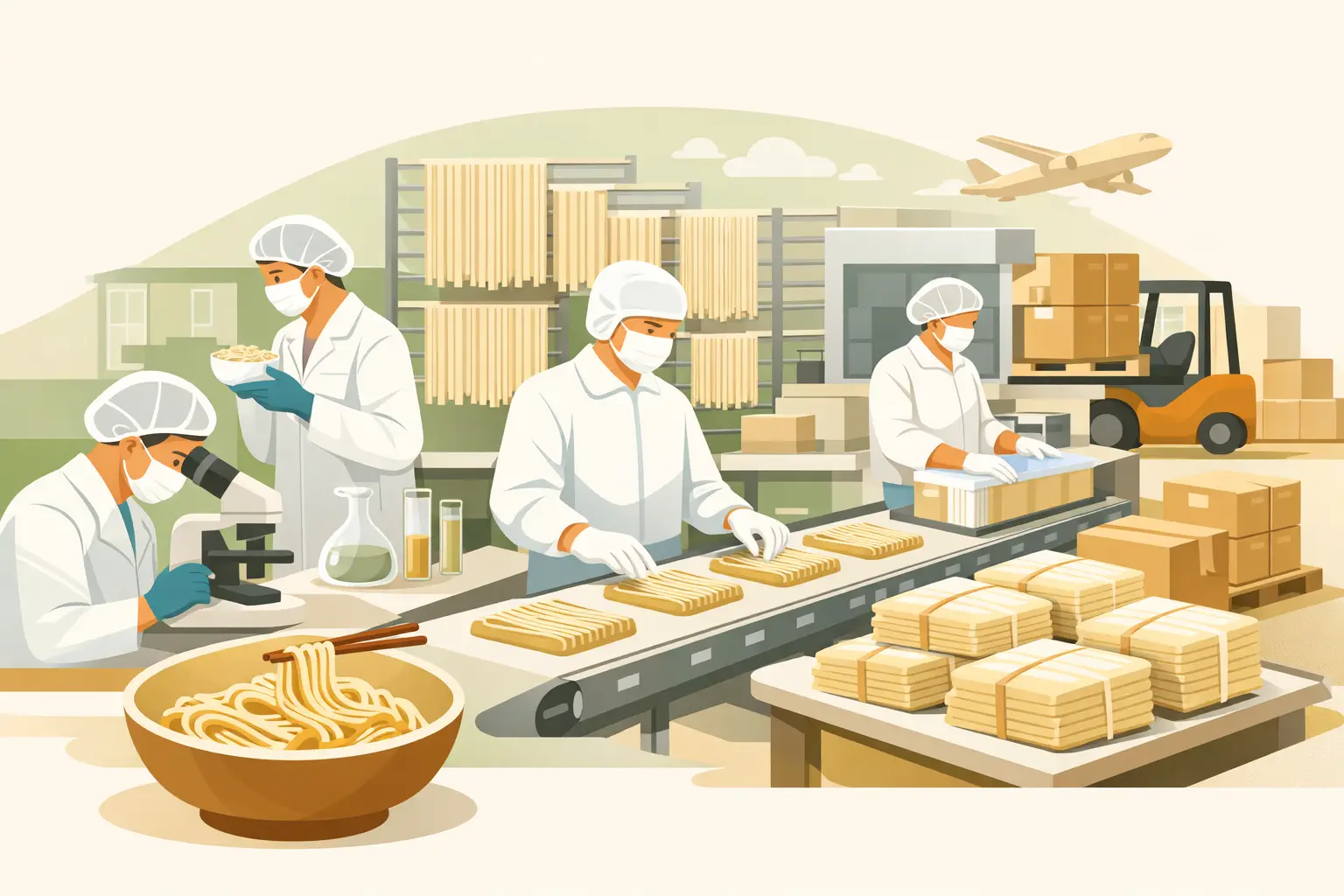
Good Manufacturing Practice (GMP) in noodle production goes beyond the cooking or drying line itself. It covers facility layout, material flow, personnel hygiene, cleaning controls, preventive maintenance, documented work instructions, traceability, and batch records. In practical terms, it means the process is designed so that every stage can be controlled, checked, and repeated.
That matters even more in OEM and ODM manufacturing, where one facility may handle multiple formulations, noodle widths, pack sizes, and customer specifications. Without a structured GMP system, variation can creep in through ingredient handling, changeovers, packaging errors, or weak sanitation control. A capable manufacturer builds the process so customization does not undermine consistency.
From raw material intake to finished noodles
The GMP noodle manufacturing process starts before flour enters the mixer. Incoming raw materials need to be checked against defined specifications. That includes core ingredients such as wheat flour, starches, salt, and permitted functional ingredients, as well as packaging materials. If the wrong grade of flour enters production, the final noodle texture, dough handling, and drying performance can all shift.
Approved materials are then stored under controlled conditions to reduce contamination risk and preserve usability. Segregation is especially important where manufacturers handle multiple SKUs or specialized concepts, such as child-oriented noodles, clean-label formats, or different seasoning-free dry noodle bases. Clear identification and stock rotation support both safety and traceability.
Once materials are released for production, weighing and batching become critical control points for consistency. Even small deviations in formulation can affect dough strength, color, cooking behavior, and breakage resistance. A GMP-based system uses documented recipes and controlled batch preparation rather than relying on informal adjustments.
Mixing and dough development
Mixing is where noodle quality begins to take shape. Water absorption, ingredient sequence, and mixing time all influence dough formation. Under-mixed dough may not develop the right structure, while over-mixed dough can create processing issues later in sheeting or cutting.
In a GMP environment, operators follow established parameters and record key production details. That does not mean every noodle type is processed identically. It means each product has a defined standard. A thin air-dried noodle, for example, may require different dough handling from a thicker product designed for foodservice applications. The goal is not one process for everything, but one controlled process for each product type.
Sheeting, compounding, and strand formation
After mixing, the dough typically moves through resting, compounding, and sheeting stages before it is slit or cut into strands. Equipment condition matters here more than many buyers realize. Roller calibration, blade condition, and line cleanliness can all affect noodle thickness, texture, and appearance.
GMP controls reduce the chance of physical contamination, product defects, and variation between batches. Preventive maintenance is part of this. If rollers are worn or alignment drifts, the noodle may still be produced, but quality consistency can suffer. For a distributor or brand owner, that creates complaints that are difficult and costly to manage downstream.
Drying and process control are where consistency is protected
For dry noodle manufacturers, drying is one of the most important technical stages. Moisture reduction has to be controlled carefully to preserve structure and support stable finished goods. If drying is too aggressive, noodles may crack, become excessively brittle, or lose the intended texture. If it is insufficient, the product may not meet the required standard for stable distribution.
This is where GMP connects closely with process validation and production discipline. Temperature, airflow, line loading, and drying time need to be managed according to the noodle format. Air-dried noodles, fried noodles, and specialty formulations such as child-friendly noodles do not behave the same way. A manufacturer with real process control understands these differences and adjusts operating parameters accordingly, rather than forcing every product through the same line logic.
Hygiene control during manufacturing
Because noodles pass through multiple stages before final packing, personnel hygiene and environmental controls remain essential throughout production. GMP practices typically cover hand hygiene, protective clothing, controlled movement in production zones, and routine sanitation verification. These may sound basic, but they are often the difference between a factory that looks organized and one that consistently produces dependable export-ready goods.
For B2B customers, hygiene control also has a commercial dimension. Strong practices reduce the risk of non-conformities, customer complaints, and avoidable disruptions. That is particularly relevant when products are intended for retail distribution, private label supply, or cross-border trade where documentation and consistency are closely reviewed.
Packaging is part of the process, not an afterthought
A well-made noodle can still fail commercially if packaging control is weak. In the GMP noodle manufacturing process, packaging is treated as a continuation of quality assurance, not a final cosmetic step. The right packaging materials need to be used for the right SKU, print details need to match the product, and sealing performance needs to be consistent.
For OEM and private-label projects, packaging accuracy is especially important because a single site may run several customer brands, formats, and language versions. Label mix-ups, wrong count packing, or poor sealing can create expensive market issues. GMP discipline helps reduce those risks through line clearance, packaging verification, and finished goods inspection.
Traceability and documentation
One reason experienced buyers ask detailed manufacturing questions is that traceability matters long after production ends. If there is a complaint, a specification review, or a market query, the manufacturer should be able to trace the batch, ingredients, packaging materials, and production records.
Documentation is not paperwork for its own sake. It supports accountability. Batch records, cleaning logs, inspection data, and release checks help prove that the process was followed as intended. For importers and brand owners, that level of control builds confidence because it shows the factory is managing operations systematically, not informally.
Why GMP matters differently for OEM and ODM noodle projects
A standard house-brand noodle line and a customized development project do not carry exactly the same manufacturing risks. With OEM and ODM work, formulation changes, packaging variations, and product positioning often introduce extra complexity. A child-friendly noodle concept, a cleaner-label request, or a specific texture target may require changes in raw material selection, mixing behavior, drying profile, or pack format.
That is where GMP needs to work alongside product development. The process should be flexible enough to support customization, but structured enough to keep results repeatable. This balance is what many B2B buyers are really evaluating. A manufacturer may offer many product ideas, but if those ideas cannot be produced consistently under controlled conditions, the commercial value is limited.
What buyers should ask about the GMP noodle manufacturing process
When assessing a manufacturing partner, buyers should look beyond whether GMP is listed and ask how it is practiced on the floor. It helps to understand how raw materials are approved, how recipes are controlled, how changeovers are managed, how sanitation is verified, and how finished goods are checked before release.
It also helps to ask how the factory handles variation between product types. Not all noodles require the same process conditions, and a reliable partner should be clear about those differences. A manufacturer focused on dry Asian noodles, including air-dried and customized formats, should be able to explain how process control supports texture, appearance, pack integrity, and market readiness without overpromising.
For many buyers, the strongest sign of a dependable partner is not a sales claim. It is a manufacturing system that makes quality repeatable. That is why companies such as Tehki Food place practical emphasis on GMP as part of a wider quality and food safety framework that supports OEM, ODM, and export-oriented noodle production.
The best manufacturing relationships usually start with a simple question: can this factory produce the noodle we want, at the quality we need, with controls we can trust? When the GMP noodle manufacturing process is genuinely built into daily operations, that question becomes much easier to answer.