
A noodle product can look straightforward on a purchase order, yet its commercial success depends on many decisions behind the pack. Noodle texture must remain consistent from batch to batch. Packaging must suit the intended channel. Ingredients and portion formats must match the market position. For buyers seeking Malaysia's trusted noodle manufacturer for OEM, wholesale & export markets, the real requirement is not simply a factory that can produce noodles. It is a manufacturing partner that can turn a product brief into a repeatable, market-ready supply program.
For brand owners, distributors, importers, and foodservice operators, that distinction matters. A supplier may be able to offer a standard noodle item, while an experienced OEM and ODM manufacturer can help shape the product around your commercial needs - from noodle style and formulation to pack format, quality controls, and export preparation.
Why Manufacturing Partnership Matters in Noodle Sourcing
Dry Asian noodles serve a wide range of channels. A retail brand may need a distinctive private-label range. A wholesaler may require dependable case packing and product consistency across recurring orders. An importer may need a product format that aligns with its local labeling and market requirements. A foodservice operator may be looking for portioned noodles that perform reliably in a busy kitchen.
These needs are related, but they are not identical. This is why a product-first approach is often more effective than choosing from a catalog alone. The starting point should be the intended customer, channel, preparation method, price position, and desired product identity. Once those are clear, manufacturing decisions become more practical.
A reliable noodle manufacturer helps buyers consider the trade-offs early. A thinner noodle may cook quickly but require careful handling. A richer fried noodle format may suit a familiar taste profile, while an air-dried format can support a different product positioning. A more customized pack can strengthen brand presentation, but it also needs to fit production and distribution realities. Good product development recognizes these decisions before they become costly changes later.
Malaysia's Trusted Noodle Manufacturer for OEM Markets
Malaysia is well positioned for businesses sourcing Asian noodle products for regional and international markets. Its food manufacturing sector combines familiarity with diverse Asian noodle traditions and the production discipline needed for commercial-scale supply. For export-oriented buyers, that combination can be especially valuable when developing products that need to balance authentic eating qualities with consistent manufacturing standards.
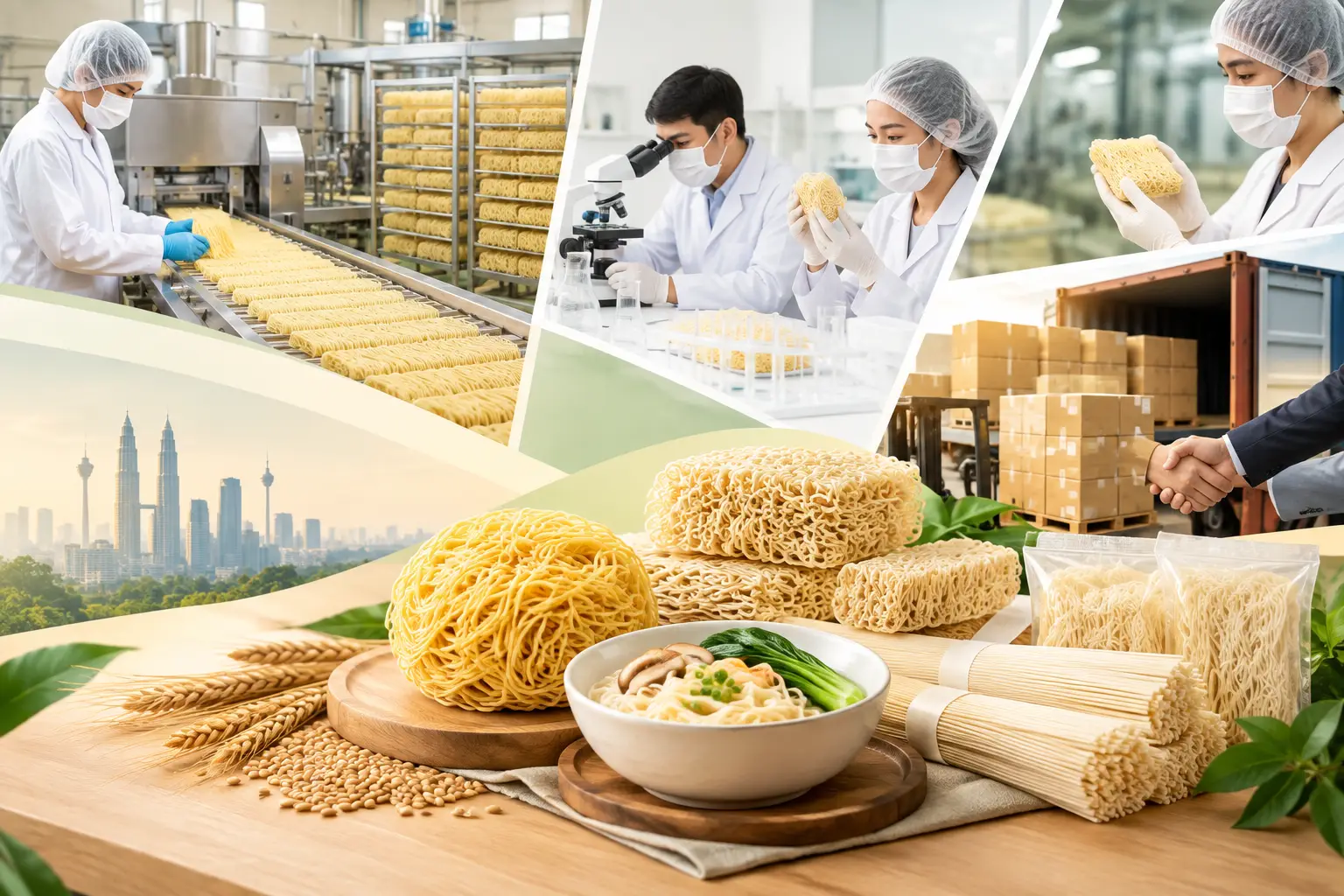
Tehki Food supports B2B customers with OEM and ODM dry noodle manufacturing for private-label and branded programs. The focus is practical: develop noodles that fit the customer’s target market, maintain dependable product consistency, and can be produced at a scale appropriate for ongoing commercial supply.
Rather than treating every buyer as if they need the same product, the development process can be tailored around the product brief. This may include noodle type, thickness, texture, ingredient direction, cooking characteristics, portion size, and packaging configuration. The right approach depends on whether the end product is aimed at grocery retail, wholesale distribution, foodservice, specialty channels, or export.
Product Formats That Support Different Market Needs
A versatile dry noodle manufacturer should be able to work across formats because each format serves a different commercial purpose. Air-dried noodles are often considered by brands building a lighter-positioned or clean-label-oriented range. Fried noodle formats may be selected for established product styles and familiar preparation characteristics. Traditional Asian noodle varieties can support category expansion for retailers, distributors, and importers seeking recognizable regional formats.
Child-focused products require a particularly careful development approach. Infant and toddler noodle concepts involve considerations such as noodle size, texture, ingredient suitability, and clear product positioning. These products should be developed responsibly, with the buyer’s target market and product requirements guiding every decision.
Customization also extends beyond the noodle itself. A house-brand product needs packaging that communicates the brand clearly and works within the selected sales channel. Retail packs, foodservice formats, multipacks, and wholesale case configurations may require different approaches. When product and packaging decisions are planned together, buyers can avoid a common problem: developing a noodle that works well technically but does not fit the final route to market.
Quality Systems Are Part of the Product
For business buyers, quality is more than visual appearance or a successful tasting session. It includes process control, traceability, hygiene practices, documentation, and the ability to produce to an agreed specification over time. These are the foundations that allow a buyer to build confidence in a private-label or export program.
Tehki Food’s quality and food safety framework includes ISO 22000, HACCP, GMP, MeSTI, and Halal certifications. For customers evaluating a manufacturing partner, these systems provide useful evidence that food safety and process discipline are built into operations rather than handled as an afterthought.
Certification should not replace buyer due diligence. Importers and brand owners still need to confirm that a product specification, labeling plan, packaging choice, and documentation process fit their intended market. However, working with a manufacturer that operates under established quality systems gives product teams a stronger starting point for these discussions.
Consistency is equally important. A brand cannot build repeat demand if the noodle texture, appearance, or cooking performance changes unexpectedly. Wholesale and foodservice buyers face the same issue at an operational level: inconsistent products can create unnecessary handling questions, customer complaints, and menu variation. Controlled manufacturing processes help reduce those risks and make procurement planning more dependable.
What to Clarify Before Starting an OEM Noodle Project
The most productive OEM discussions begin with a clear commercial brief. Buyers do not need every detail finalized before speaking with a manufacturer, but they should understand the basic direction of the project. This includes the intended sales market, customer segment, preferred noodle style, product positioning, expected preparation method, and packaging concept.
It is also useful to identify which requirements are fixed and which can be developed collaboratively. Some buyers already have a finished concept and need a capable production partner. Others have a brand opportunity but need guidance on selecting the right noodle format. Both are valid starting points, but they call for different development conversations.
For example, an importer launching an Asian noodle line may prioritize export documentation, consistent specifications, and packaging readiness. A retailer introducing a private-label range may focus on shelf presentation, category fit, and differentiated product options. A foodservice buyer may place greater emphasis on preparation convenience and portion control. The manufacturer should understand these priorities before recommending a solution.
Buyers should also be prepared to discuss ingredient preferences and product claims carefully. Health-conscious positioning, clean-label direction, and simplified ingredient concepts can be commercially relevant, but any final pack communication should be reviewed against the requirements of the intended market. A responsible manufacturer can help keep product development grounded in what can be manufactured consistently and presented appropriately.
Building for Wholesale and Export Requires Practical Planning
Wholesale and export programs add another layer of planning because the product must move reliably through multiple parties. The manufacturer, brand owner, freight partner, importer, distributor, and retailer may all need aligned documentation and specifications. Small gaps in communication can create delays or unnecessary revisions.
This is where manufacturing experience becomes valuable. A partner that understands export-oriented supply can help buyers think through product configuration early, rather than treating shipping and market documentation as final-stage tasks. Packaging durability, outer-carton requirements, product identification, and specification consistency all deserve attention from the beginning.
It also helps to plan for future growth. A successful initial launch may lead to new flavors, related noodle formats, different pack sizes, or expansion into another channel. Selecting a manufacturer with flexible development capability makes it easier to build a coherent range over time instead of sourcing each new product as a separate project.
The goal is not to make every product highly complex. Often, the strongest commercial result comes from a well-defined noodle product made consistently, packed appropriately, and supported by a manufacturer that understands the buyer’s route to market. For businesses developing private-label, wholesale, or export-ready noodle programs, starting with a detailed product conversation is a practical way to build a supply relationship that can grow with the brand.