
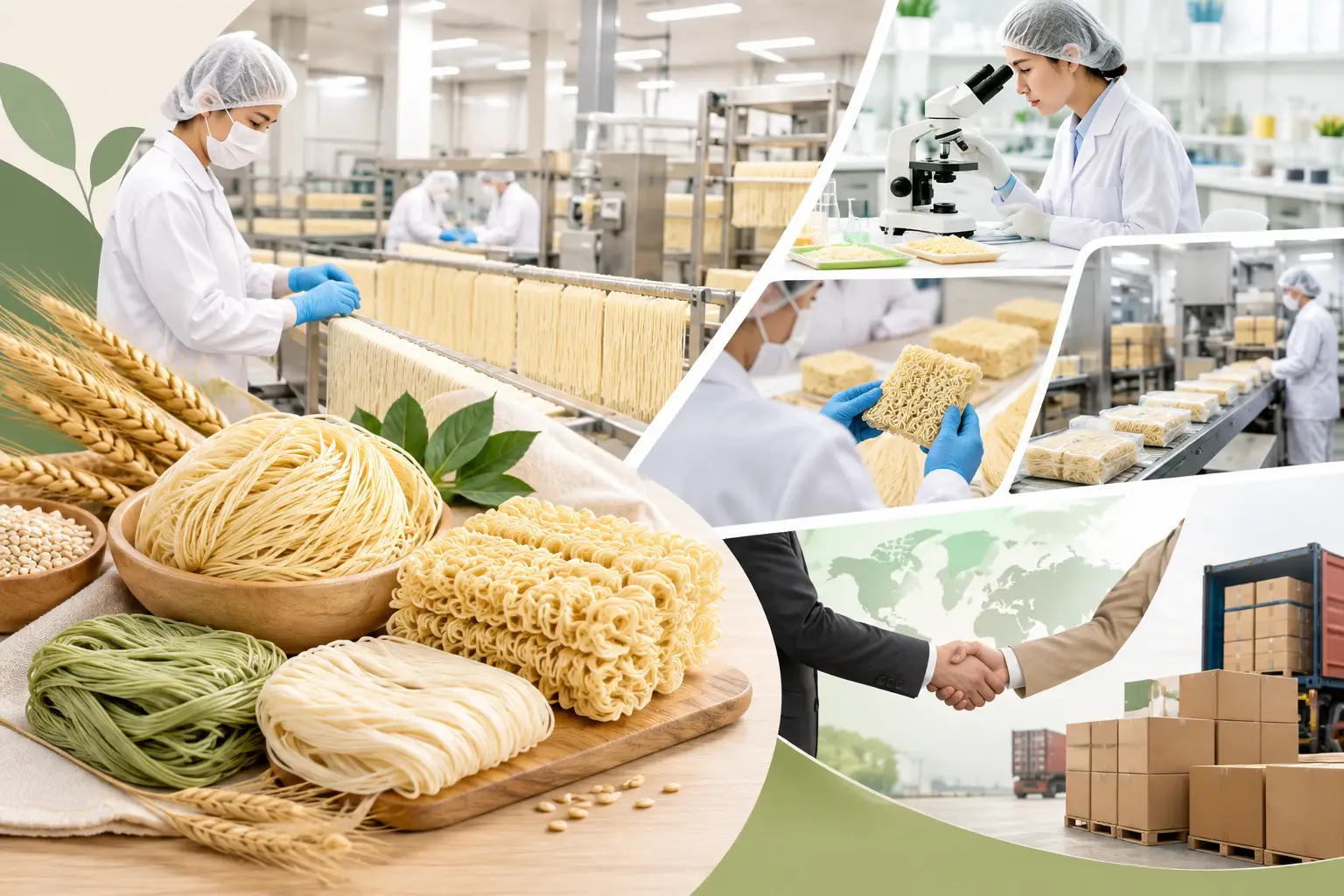
A noodle product can look straightforward on a retail shelf, yet the work behind a successful launch is highly technical. Noodle contract manufacturing: a complete guide for food brands begins with one practical point: the right manufacturer must be able to turn a commercial brief into a repeatable, safe, market-ready product. For brand owners, importers, distributors, and foodservice buyers, that means evaluating more than noodle shape and unit cost.
A dependable manufacturing partner should help align product positioning, ingredient choices, texture, packaging, quality requirements, and production scalability before a product reaches the market. The earlier these decisions are addressed, the fewer costly changes are needed later.
What Noodle Contract Manufacturing Means
Noodle contract manufacturing is an arrangement in which a specialist producer makes noodle products for another business to sell, distribute, serve, or use under its own brand. Depending on the project, the customer may provide a finished specification, or the manufacturer may support product development from the initial concept onward.
OEM manufacturing is generally suited to buyers with a defined product brief. The brand may already know its noodle type, dimensions, ingredients, pack format, and target market. The manufacturer’s role is to produce that specification consistently and according to agreed quality standards.
ODM manufacturing involves more development input from the producer. This is useful when a customer has a market opportunity or brand direction but needs help determining the most practical noodle format, formulation, portion size, or packaging approach. An experienced noodle manufacturer can translate that idea into a product that is commercially realistic to produce at scale.
The distinction matters because it affects development time, approval stages, documentation, and responsibility for final product decisions. In either model, the goal is not simply to purchase noodles. It is to establish a reliable supply solution for a branded food product.
Choosing the Right Noodle Format for Your Market
The noodle format should follow the intended sales channel, eating occasion, preparation method, and brand position. A product designed for retail convenience may require a different noodle structure than one intended for foodservice kitchens or export distribution.
Air-dried noodles are often considered when brands want a dry noodle option with a lighter product positioning and a familiar cooked noodle texture. Fried noodles may be appropriate where the intended product format and consumer expectations call for that style. Traditional Asian noodle varieties can also be tailored by thickness, width, bite, color, and cooking performance.
For child-focused concepts, noodle design requires particular care. Portion size, noodle length, texture, ingredient selection, and preparation instructions should be considered as part of the overall product brief. The aim is not to make broad claims, but to develop a product appropriate to the brand’s intended customer and use occasion.
A clear brief should answer practical questions: Will the noodles be sold as a standalone dry product or part of a meal kit? Are they prepared by consumers, restaurant staff, or institutional kitchens? Must they perform well in soup, stir-fry, or a specific sauce system? Small differences in these requirements can affect formulation and processing choices.
From Product Brief to Approved Sample
Product development works best when commercial and technical requirements are discussed together. A visually appealing concept may not be suitable for every manufacturing process, while a technically sound noodle may need adjustment to fit the target price position or package design.
A useful brief includes the desired noodle style, target channels, markets of sale, preferred ingredients, anticipated cooking method, pack size, and brand objectives. It should also identify any required certifications, label requirements, or customer specifications early in the process.
The sample stage is where assumptions are tested. Buyers should evaluate appearance, texture, cooking behavior, portioning, and how the noodles work in the intended final application. For foodservice buyers, kitchen handling and hold time may be especially relevant. For retail brands, consistency across preparation instructions and consumer use is often a priority.
Sample approval should not be treated as a formality. It is the point at which the product specification becomes more precise. Changes made after full-scale production begins can affect cost, packaging, schedules, and inventory planning.
Food Safety and Certification Are Purchasing Criteria
For B2B buyers, food safety systems are central to supplier selection. Certifications do not replace a buyer’s own quality review, but they provide important evidence that a manufacturer operates with structured controls and documented processes.
When assessing a noodle manufacturing partner, ask how it manages raw material approval, production hygiene, traceability, quality checks, and finished-product release. Buyers supplying multiple markets should also discuss export documentation needs and destination-market requirements at an early stage.
Tehki Food operates with ISO 22000, HACCP, GMP, MeSTI, and Halal certifications, providing a structured quality foundation for private-label and OEM/ODM dry noodle projects. For customers sourcing from Malaysia for domestic or international distribution, this can support supplier confidence while product-specific requirements are reviewed together.
Certification is only one part of the decision. Day-to-day consistency, responsive technical communication, and a manufacturer’s willingness to clarify what is feasible are equally valuable. A good partner will identify potential concerns before they become production problems.
Packaging Must Protect the Product and Support the Brand
Packaging decisions should be made alongside noodle development, not after the noodle is finalized. The package must suit the product format, protect product quality through the intended distribution route, and provide sufficient space for required product information and brand communication.
Retail buyers may prioritize shelf presentation, pack hierarchy, and ease of merchandising. Importers may focus more heavily on case configuration, shipping practicality, and labeling for destination markets. Foodservice operators may need formats that improve kitchen storage and portion control.
Private-label projects also require alignment between packaging artwork and production specifications. Confirm who is responsible for artwork preparation, material sourcing, packaging approvals, and version control. Clear ownership reduces the risk of outdated files, incorrect labels, or avoidable delays.
How to Evaluate a Noodle Manufacturing Partner
The lowest quoted cost is rarely the full cost of a contract manufacturing decision. A supplier that cannot maintain agreed specifications, communicate clearly, or support growth can create far greater expense over time.
Look for a partner with relevant noodle expertise, documented quality systems, and experience with the formats you plan to sell. Ask direct questions about customization boundaries, ingredient sourcing, sampling, quality control, packaging options, and production planning. Their answers should be specific and practical rather than overly broad.
It also helps to assess whether the manufacturer understands your business model. A distributor expanding an Asian food portfolio may need reliable repeat ordering and export-ready coordination. A new brand may need more support refining its concept. A foodservice operator may require noodles engineered for a particular kitchen application. The right level of support depends on the project.
Build the Relationship Before You Need Scale
The strongest noodle programs are built through clear specifications, realistic launch planning, and regular communication between buyer and manufacturer. Share forecast assumptions when possible, report quality feedback promptly, and keep the manufacturer informed when packaging, markets, or menu applications change.
Contract manufacturing is not a one-time purchasing transaction. It is a production relationship that should become more efficient as both sides gain a clearer understanding of the product and its market. Start with a well-defined brief, validate the sample carefully, and choose a partner prepared to support the next stage of your brand’s growth.