
A dry noodle product can have the right texture, flavor profile, and portion size, yet still underperform if its packaging is not suited to the route to market. For brand owners and importers, noodle packaging material options affect more than shelf appearance. They influence product protection, production efficiency, freight handling, brand positioning, and how reliably each pack reaches the customer.
The best choice is rarely a single material selected in isolation. It is a packaging system matched to the noodle format, distribution conditions, target retail channel, and commercial objective. A value-focused multipack for domestic retail has different needs from a premium air-dried noodle range intended for export, foodservice portions, or a child-friendly product concept.
Start With the Product and Distribution Reality
Dry noodles need protection from moisture, physical damage, contamination, and unnecessary exposure to air during storage and distribution. Fragile noodle cakes, nests, and thin strands can also break if the pack offers too little structural support. At the same time, overly heavy or complex packaging can raise material costs, packing-line requirements, and freight weight without creating a meaningful benefit.
Before choosing a material, product teams should clarify the noodle's shape, frying or drying method, portion format, seasoning inclusion, outer-carton configuration, and expected handling conditions. These details guide the practical level of barrier, puncture resistance, seal performance, and stiffness required.
For example, an individually wrapped fried noodle cake may need a flexible film that seals consistently at speed and protects the product inside a carton. A premium air-dried noodle nest may benefit from a pack format that presents the product clearly while limiting crushing. Bulk foodservice packs may prioritize portion control, handling efficiency, and clear product identification over retail display impact.
Flexible Plastic Films for Efficient Protection
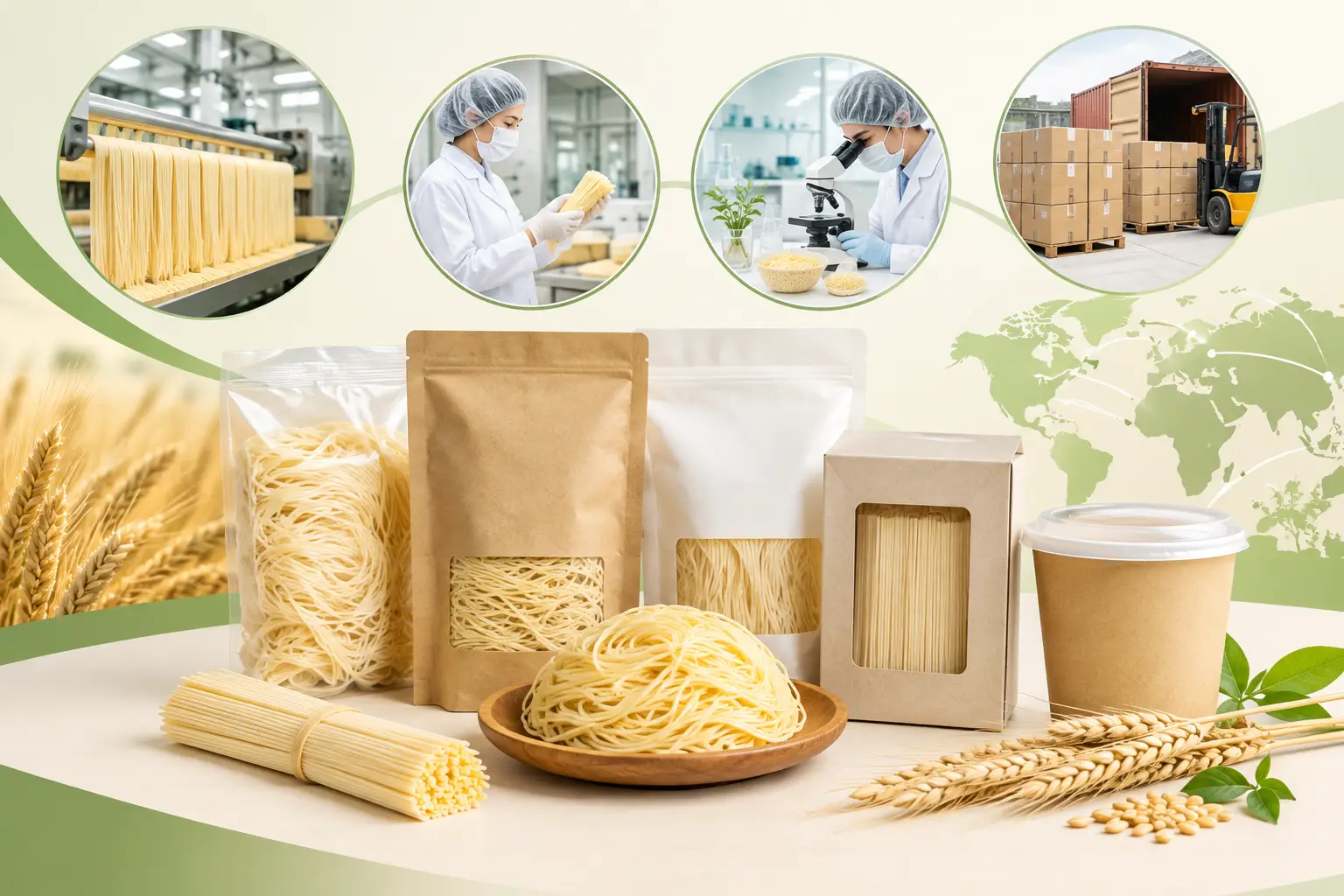
Flexible plastic film remains a common choice for dry noodle packs because it is lightweight, efficient to process, and adaptable to many formats. It can be supplied as a single web for flow wrapping, as preformed bags, or as part of a laminated structure designed for specific barrier and mechanical requirements.
Polypropylene-Based Films
Polypropylene films are widely used in dry-food packaging. Depending on the structure, they can offer useful clarity, stiffness, and moisture protection while supporting efficient high-volume packing. Clear film can be particularly valuable when a brand wants buyers to see the noodle form, color, or ingredient inclusions.
The limitation is that not every polypropylene structure provides the same barrier or sealing performance. Material selection should account for the noodle's sensitivity, the intended pack weight, storage conditions, and the capabilities of the manufacturer’s packaging equipment.
Multi-Layer Laminates
Laminated films combine layers to balance functions such as moisture barrier, puncture resistance, printability, and heat sealing. They are often a practical option for export-oriented retail packs, products with seasoning sachets, or formats where a reliable seal and stronger pack performance are essential.
A laminate can also support a premium visual finish, including matte surfaces, metallic effects, or high-quality graphics. However, more layers do not automatically mean a better pack. Complex structures may affect material recovery options in markets with developing recycling infrastructure, and they should be specified only when their performance benefits justify the added complexity.
Metallized Film Structures
Metallized films can improve barrier performance and create a distinctive retail presentation. They may suit noodle products that need additional protection from light or a more premium shelf appearance. For brands, the commercial question is whether that finish supports the product’s positioning and price architecture.
Metallized materials are less suitable when product visibility is a key selling feature. They also require thoughtful artwork development, since the reflective surface can change how colors and fine details appear in print.
Paper-Based Formats and Their Role
Paper packaging can support a natural, craft, or premium brand presentation, especially for dry noodle products positioned around straightforward ingredients or traditional formats. It also provides useful stiffness in some applications and can work well as an outer sleeve, carton, or bag component.
Paper alone is not always sufficient for dry noodle protection. Uncoated paper may have limited resistance to moisture, grease, tearing, or puncture. A paper-based pack may therefore need a coating, inner liner, or combined structure to meet the required performance standard.
For this reason, paper is often most effective as part of a considered pack design rather than as a simple substitute for film. A paper sleeve around a sealed inner pack can create a strong shelf presence while allowing the inner material to handle primary product protection. This approach may also help brands separate marketing communication from functional barrier requirements.
Rigid and Semi-Rigid Packaging Options
Trays, cartons, and cups have a place in specific dry noodle applications, although they are generally less material-efficient than flexible packs. Their advantage is structure. They can protect delicate noodle nests, support premium presentation, or make portioned products easier to merchandise and handle.
A folding carton can serve as an outer pack for bundled portions or fragile noodle formats. It provides a broad surface for branding, preparation guidance, ingredient information, and export labeling. It also performs well when products are stacked in retail displays. The trade-off is additional material use and assembly requirements.
Cup and bowl formats are more relevant when the noodle product is designed for convenient preparation and includes associated components. For a dry noodle manufacturer, this format requires coordination between noodle dimensions, fill weight, internal space, lid or seal design, and secondary packaging. It should be evaluated early in development because the packaging format can influence the noodle cake specification itself.
Choosing Packaging by Sales Channel
The same noodle recipe may require different packaging material options across channels. Retail packs need visual differentiation, barcode space, and adequate protection through warehouse and store handling. Distributor and wholesale packs need dependable carton performance and clear case identification. Foodservice formats may emphasize larger pack sizes, operational convenience, and portion flexibility.
Export projects add another layer of consideration. Longer logistics routes, climate variation, container handling, and country-specific labeling requirements can place greater demands on packaging integrity. The primary pack, secondary carton, pallet arrangement, and loading method should work together. A strong individual wrapper cannot fully compensate for a weak outer carton, just as a well-designed carton cannot protect a product that is poorly sealed inside.
Packaging Design Is Also a Manufacturing Decision
Packaging development should involve the noodle manufacturer from the beginning, not after the product specification is fixed. Pack dimensions influence how noodles are cut, folded, nested, or formed. Film width, seal area, and pack configuration affect machine setup, production consistency, and product handling.
Artwork and labeling should also be planned with practical print limitations in mind. Fine text, metallic finishes, transparent windows, and multiple language panels can all be achievable, but each choice should be reviewed against the selected material and print method. A visually ambitious design that is difficult to reproduce consistently can create avoidable delays and variation.
For private-label development, a clear packaging brief is useful. It should identify the target market, noodle type, net weight, pack count, preferred format, visual direction, carton needs, and any required claims or certification marks that have been properly approved for use. This gives the manufacturing team a workable basis for matching materials to the final product.
A Practical Decision Framework
Rather than asking which packaging material is best, B2B buyers should ask which structure delivers the right balance for this product. The decision typically comes down to five connected factors: product protection, brand presentation, packing compatibility, distribution demands, and total commercial practicality.
A clear polypropylene-based film may be appropriate for a standard retail noodle pack where visibility and efficient packing matter most. A stronger laminated film may be better suited to a product with demanding distribution conditions. A paper sleeve and inner protective pack can support a more premium presentation. Cartons or semi-rigid formats may be justified where noodle breakage risk or retail display requirements are higher.
Tehki Food works with brand owners and food businesses to align dry noodle format and packaging direction during OEM and ODM development. The goal is not to add packaging complexity for its own sake, but to create a pack that supports consistent production, reliable handling, and the product position a business wants to build.
The most useful packaging choice is the one that protects the noodle, fits the production line, communicates the brand clearly, and remains practical from the factory floor to the final point of sale.