
A noodle that performs well in a test kitchen can still fail in service. It may break during holding, vary from batch to batch, or create questions about ingredient sourcing that your procurement team cannot answer clearly. That is why sourcing safe and sustainable noodles for food service business is not only a product decision. It is a purchasing, operational, and brand protection decision.
For foodservice operators, distributors, and private-label buyers, the right noodle supplier should reduce risk while supporting menu consistency and commercial practicality. Safety matters because a weak quality system can create disruption far beyond a single shipment. Sustainability matters because more buyers now expect clearer sourcing standards, more thoughtful production choices, and product formats that align with changing menu and brand requirements. The challenge is that both terms are often used loosely. What matters is how they show up in actual manufacturing and supply performance.
What safe and sustainable noodles really mean in food service
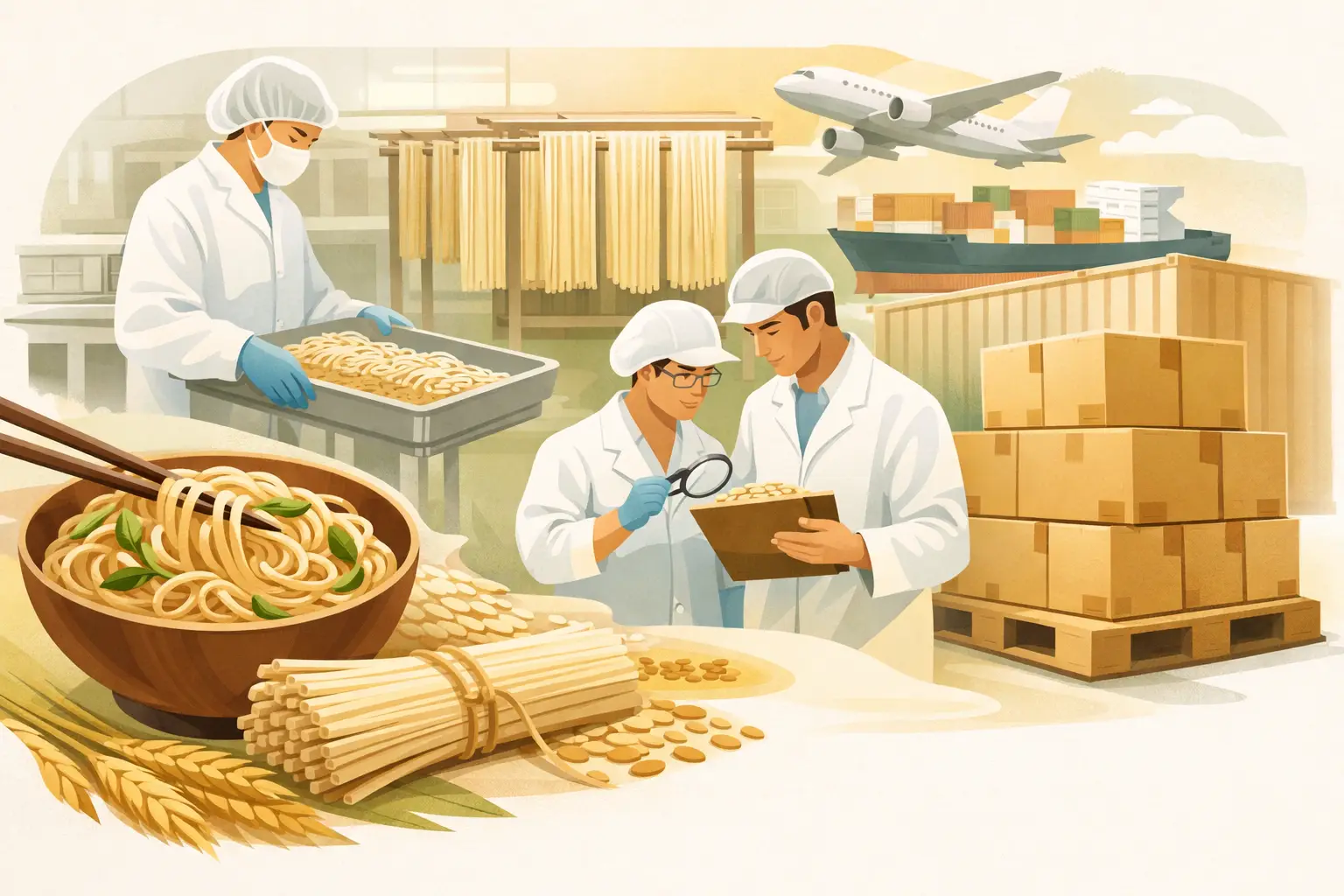
In food service, safe noodles are not defined by claims on the front of a pack. They are defined by the discipline behind the product. That includes controlled raw material selection, documented manufacturing processes, traceability, hygiene practices, allergen management where relevant, and consistent quality verification. Buyers should also look at whether the manufacturer operates under recognized food safety systems such as ISO 22000, HACCP, GMP, MeSTI, and Halal, because these provide a stronger basis for confidence than general assurances.
Sustainable noodles are also more than a marketing phrase. In practical terms, sustainability can include efficient production methods, ingredient choices that fit market expectations, packaging options appropriate for distribution needs, and product formats that help reduce waste in kitchens. For many foodservice businesses, sustainability is best understood as responsible manufacturing combined with realistic operational value. A product that creates excessive breakage, poor portion control, or unreliable supply is not especially sustainable from a commercial point of view.
Start with fit for service, not just fit on paper
One of the most common sourcing mistakes is choosing noodles based mainly on specification sheets. Specs are necessary, but they do not tell the full story. A noodle for quick-service operations needs different performance characteristics than one for hot pot chains, catering kitchens, retail meal kits, or institutional food service.
Texture stability is one example. Some formats hold their bite better under extended service conditions, while others are better suited to fast preparation and immediate consumption. Portion format also matters. Standardized nests, blocks, or weight-defined packs can help kitchen teams control usage and improve consistency. If a supplier can customize noodle thickness, cut, texture, and pack style, that flexibility can make a real difference when you scale across outlets or markets.
The best sourcing conversations usually start with operational questions. How will the noodles be cooked, held, plated, transported, or reheated? Are they intended for soup applications, stir-fry, grab-and-go meals, or meal components? Will your business need child-friendly formats, cleaner-label positioning, or air-dried options rather than fried products? The more clearly these needs are defined, the easier it is to identify the right manufacturing partner.
How to evaluate sourcing safe and sustainable noodles for food service business
A reliable evaluation process should move beyond price comparison. Cost always matters, but the lowest quoted figure can become expensive if product inconsistency causes kitchen complaints, waste, or purchasing instability.
Begin with the manufacturer’s quality systems. Ask how ingredients are qualified, how batch consistency is controlled, and what documentation supports traceability. Review certifications, but also look at whether the supplier can explain their process clearly. Strong manufacturers tend to speak in operational terms, not vague promises.
Next, assess product development capability. Foodservice needs are rarely one-size-fits-all. You may need a specific noodle density, hydration response, cooking tolerance, or packaging format for your menu concept or route to market. A manufacturer with OEM or ODM capability can usually support these adjustments more effectively than a supplier limited to standard catalog products.
Then look at supply reliability. A sustainable sourcing decision should account for continuity as well as credentials. Can the supplier scale with your business? Do they have established systems for export documentation, production planning, and quality consistency across repeat orders? A dependable manufacturer helps protect service continuity and reduces the operational burden on your procurement team.
Safety indicators buyers should not overlook
Food safety is often discussed at a high level, but buyers benefit from checking a few specific indicators. First is process discipline. A supplier should be able to explain how they manage critical control points, monitor production conditions, and maintain hygiene standards through documented systems.
Second is traceability. If an issue arises, the ability to trace ingredients and finished batches quickly matters. This is especially relevant for importers, distributors, and private-label owners who carry brand responsibility in the market.
Third is consistency. Safety and quality are closely connected in manufacturing. A producer that controls moisture, texture, dimensions, and packing standards consistently is usually operating with stronger process control overall. That does not guarantee perfection, but it is a good sign that systems are taken seriously.
Finally, check whether the supplier understands your market requirements. Export-oriented food service buyers often need not only a safe product, but a manufacturer prepared for structured documentation, repeatability, and commercial accountability.
Sustainability should be practical, not performative
In B2B sourcing, sustainability works best when it supports both operational outcomes and market credibility. That may mean selecting air-dried noodle options for certain product lines, choosing packaging that fits distribution realities, or developing noodle formats that help reduce over-portioning and kitchen waste. It may also mean working with a manufacturer that can support cleaner ingredient direction where appropriate, without compromising process stability.
There are trade-offs. A highly customized sustainable packaging concept may add complexity to packing and logistics. A reformulated noodle may align better with your product positioning but require additional testing to confirm cooking performance. Sustainable sourcing is rarely about a single perfect answer. It is about choosing a manufacturer that can discuss these trade-offs honestly and develop a workable solution.
This is where manufacturing experience matters. Suppliers that understand both noodle formulation and commercial production are better placed to balance texture, efficiency, ingredient considerations, and packaging practicality. That balance is more valuable than broad sustainability language with little operational detail behind it.
Why manufacturer capability matters as much as the noodle itself
Many buyers initially focus on the finished noodle sample, which is understandable. But long-term success often depends more on the manufacturer’s capability than on the first sample alone. A strong partner can refine a product, maintain consistency, support private-label development, and adapt to changing business needs.
For example, a foodservice operator may start with a standard dry noodle and later require a house-brand format, revised portioning, or a more specialized texture profile for different menu applications. A manufacturer with OEM and ODM experience is better equipped to support that progression. This becomes especially important for distributors and brand owners building a broader noodle range rather than sourcing a single stock item.
Malaysia-based manufacturers with export experience can also offer an advantage for buyers looking for Asian noodle expertise combined with structured production systems. Tehki Food is one example of a manufacturer positioned around this need, with dry noodle capabilities that support product customization, certified quality systems, and export-oriented supply for B2B customers.
Questions worth asking before you commit
A productive supplier review is usually simple and direct. Ask how the noodles are made, what formats can be customized, and which certifications support the facility’s quality management. Ask what testing is done to confirm consistency. Ask how the product is expected to perform in your specific foodservice application, not just under ideal preparation conditions.
It also helps to ask what can be adjusted and what should remain standardized. Not every parameter should be customized. In some cases, a standard format gives better cost control and production efficiency. In others, a custom specification creates stronger menu differentiation or brand value. The right decision depends on your volume outlook, service model, and product strategy.
A good manufacturing partner will not treat every request as identical. They will help you distinguish between features that matter commercially and features that add complexity without enough return.
Choosing noodles for food service is rarely just about buying a staple. It is about securing a product that can stand up to operational pressure, support your market position, and come from a manufacturer with systems you can trust. When safety, sustainability, and manufacturing fit are evaluated together, sourcing becomes less reactive and more strategic. That is usually where better foodservice products begin.